

In a conversation, all three appear in one file tree:
Shared files (shared/)
company_inventory_guidelines.md
supplier_lead_times.csv
Memory (state/)
notes
flagged_products_log.csv
Outputs
stock_health_report.csv
stock_health_chart.png
Where to find them
- In a conversation
- In the agent's settings
Open the workspace panel and select Files. Shared files and memory appear under the agent, with the current conversation’s outputs below them. Select the cog next to Agent to open the agent’s settings.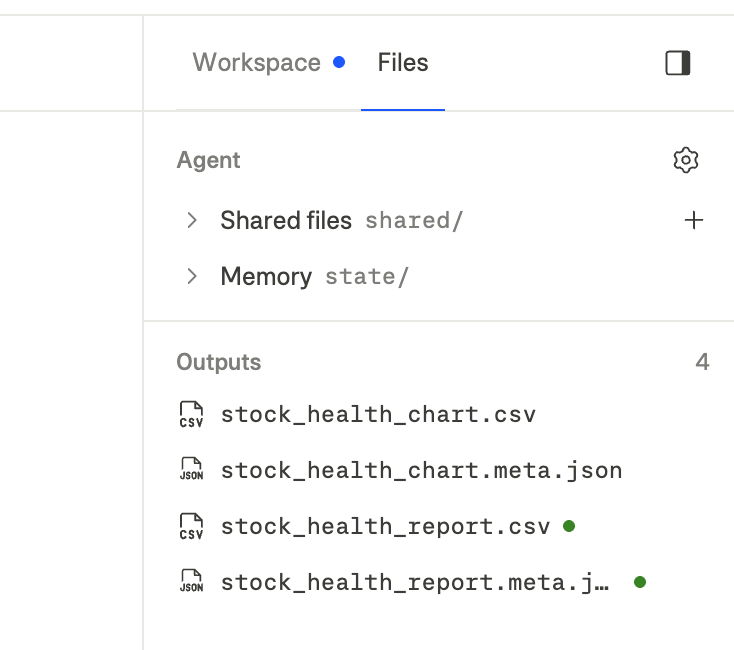
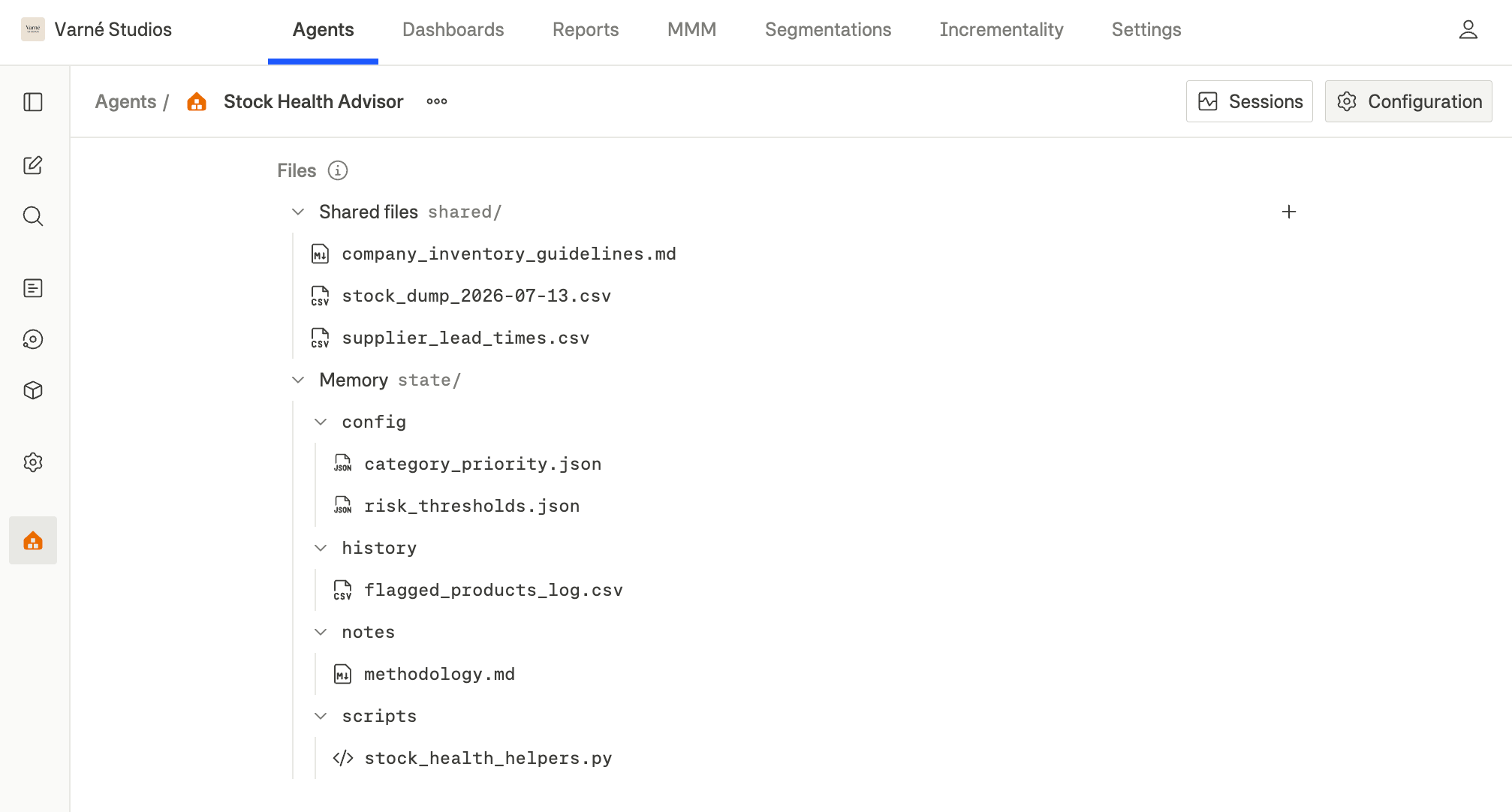
The agent section appears when the conversation runs on one of your agents. Conversation outputs are always there.
Shared files
Shared files are reference files you upload for the agent, such as brand guidelines, product catalogs, target margins, or campaign calendars. They are available in every conversation with that agent. The agent can read them but never changes them.Memory
Memory contains notes the agent writes for itself. It can record information about your data, preferences, or earlier results and read those notes in later conversations. You can review and manage these notes:- Open a memory file to read it.
- Delete a memory file if the information is wrong or outdated. The agent will no longer have that note.
The agent may mention a path such as
state/notes.md. The state/ folder is memory, and its name appears next to Memory in the file tree.Outputs
Files created during a conversation, such as CSV exports, images, and reports, appear under Outputs. Select a file to preview it or download it from the row. Outputs belong to their conversation: a new conversation starts with an empty Outputs section.Spotting what changed
The file tree marks changes since you last opened it:- A green dot marks a new file.
- An orange dot marks an updated file.
Mention a file with @
Type @ in the message box to search integrations, apps, and files in the current session. To mention a file, search for a shared file, memory file, or earlier output:
1
Type @ and start typing the file name
2
Pick the file
It turns into a pill in your message.
3
Send
The file is attached to your message.
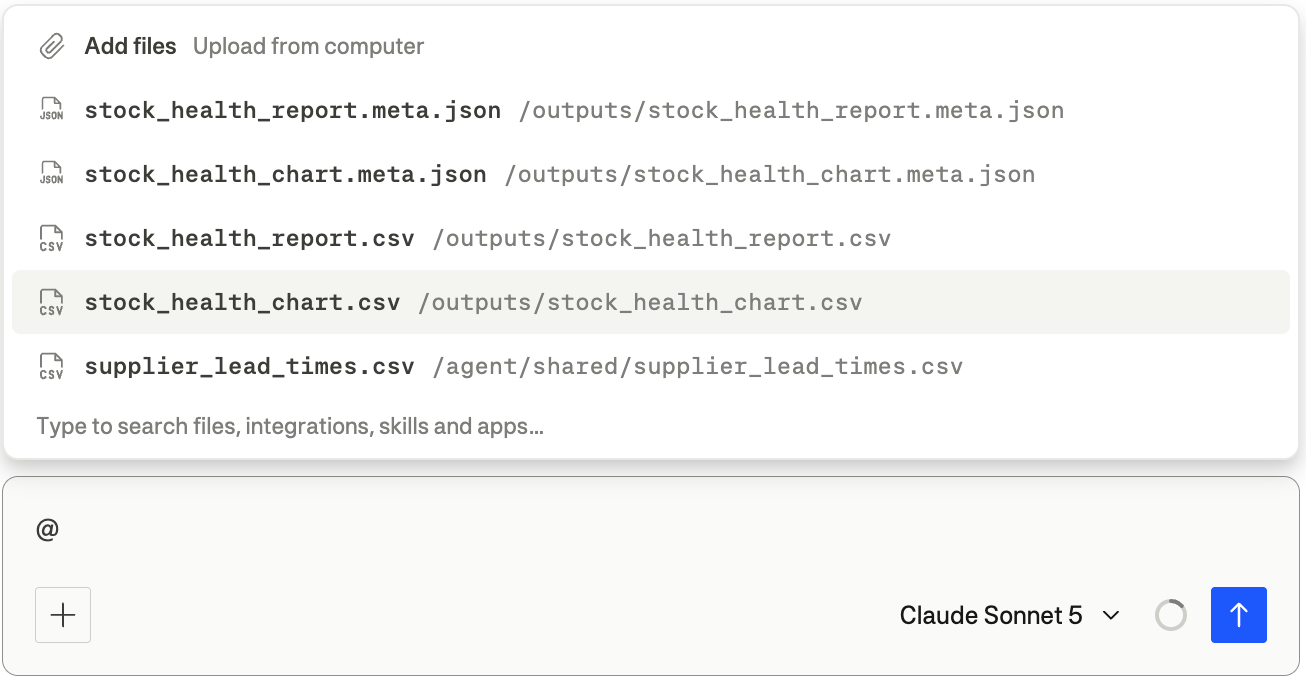
@ menu.