

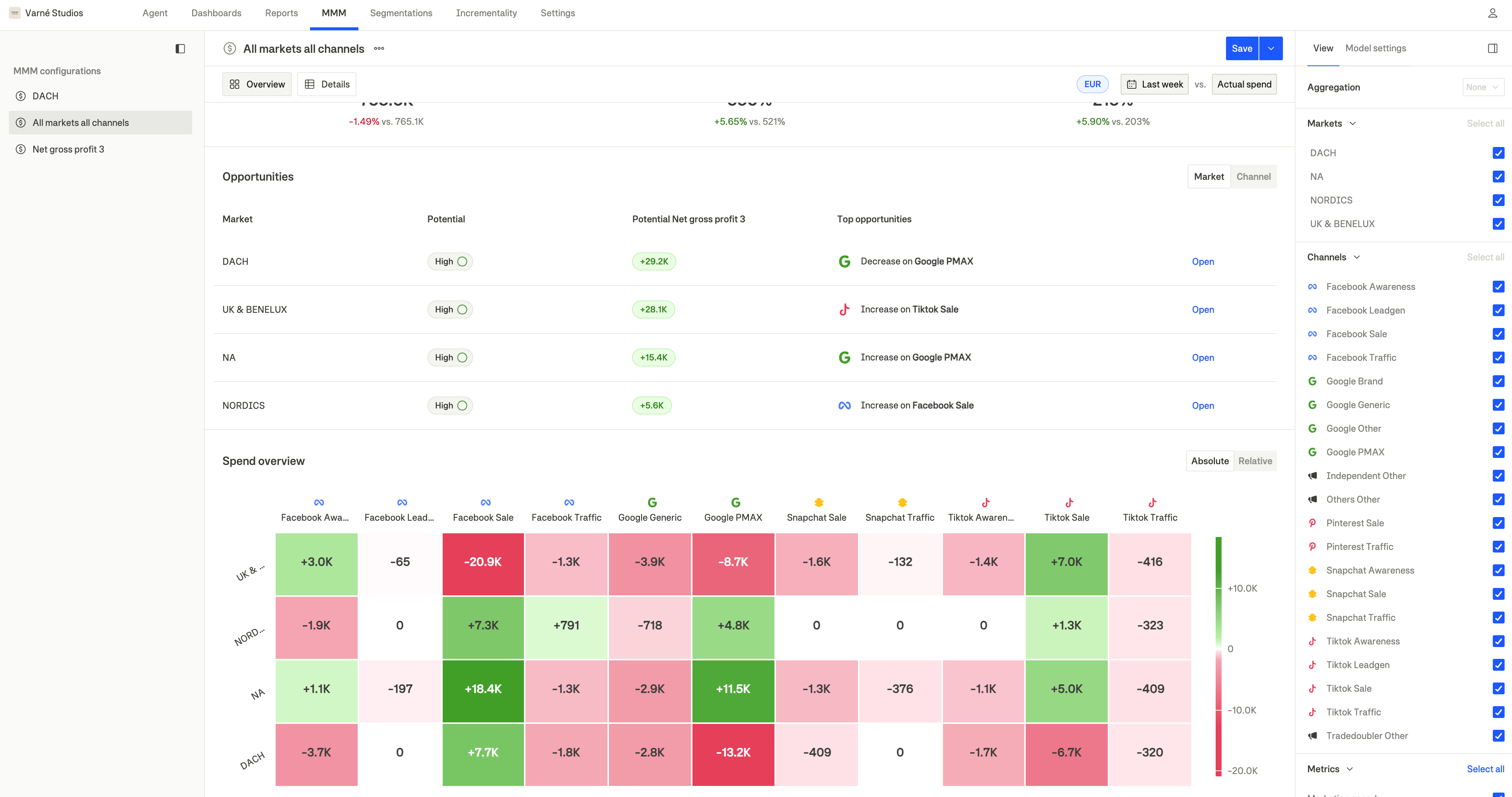
Metric cards
At the top of the Overview, you’ll see key performance metrics comparing optimized vs. actual performance:
Each metric shows:
- The optimized value (what following recommendations would achieve)
- A percentage change compared to actual performance (green = improvement, red = decline)
- The actual value for reference
Opportunities section
The Opportunities section identifies where the biggest optimization potential exists, organized by either Market or Channel.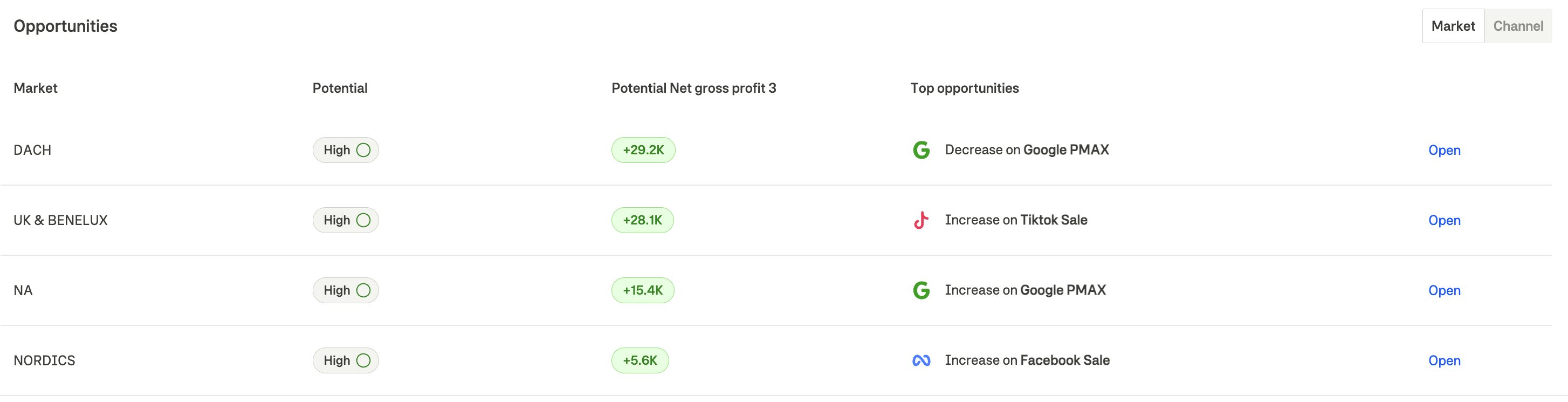
Market view
Shows optimization potential by geographic region:Channel view
Shows optimization potential by marketing channel:Understanding potential indicators
The Potential badge shows the confidence level of the optimization opportunity:Top opportunities
The Top opportunities column shows the single most impactful action for each market or channel:- Increase on [Channel]: Model recommends increasing spend on this channel
- Decrease on [Channel]: Model recommends decreasing spend on this channel
Spend overview matrix
The Spend overview section displays a heatmap showing recommended spend changes across all markets and channels.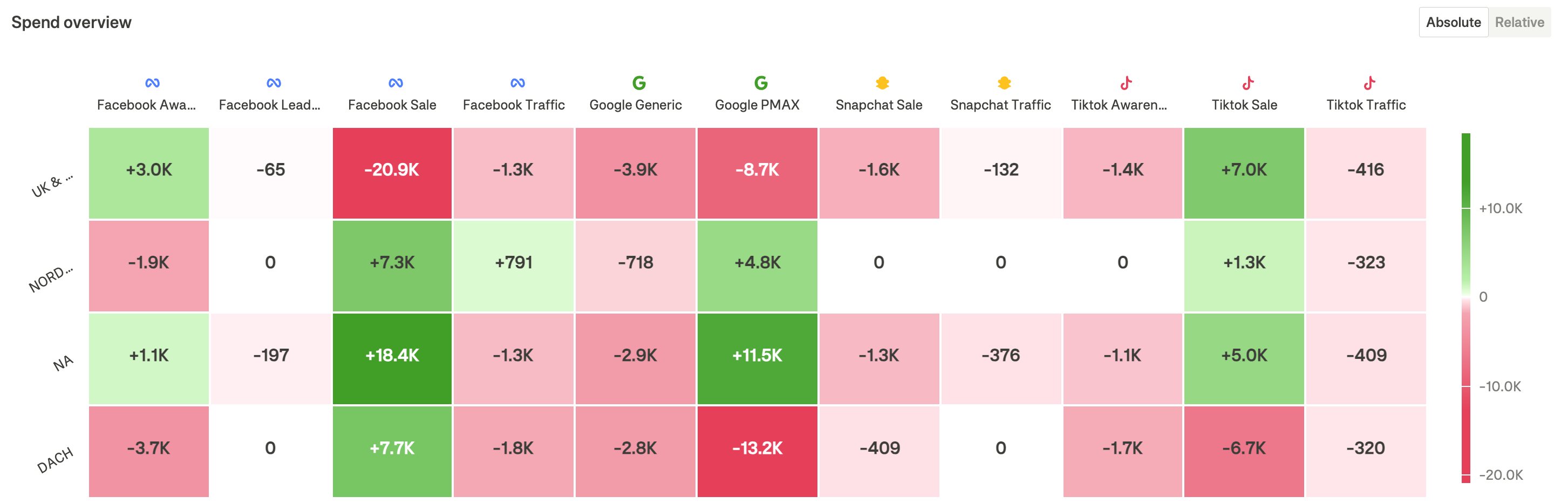
Reading the matrix
- Rows: Markets (geographic regions)
- Columns: Channels (marketing platforms/funnels)
- Cells: Recommended spend change
Color coding
The intensity of the color indicates the magnitude of the recommended change—darker colors mean larger changes.
Absolute vs. Relative toggle
Use the toggle in the section header to switch between:Interpreting the matrix
- Green columns: Channels that should receive more budget across most markets
- Red columns: Channels that are overspending across most markets
- Mixed rows: Markets where channel mix needs rebalancing
- Large values: Priority areas for attention
The spend matrix respects your configured guardrails. Recommendations won’t exceed the maximum spend increase/decrease limits you’ve set.
Using the Overview effectively
Quick assessment workflow
- Check metric cards: See if there’s significant optimization potential (large positive % changes)
- Review opportunities: Identify which markets or channels have the highest potential
- Scan the matrix: Get a visual sense of where money should flow
- Drill down: Click into specific markets or channels for detailed recommendations
When to use Overview vs. Details
Filtering the Overview
Use the View panel on the right to customize what’s shown:- Markets: Select which markets to include in the analysis
- Channels: Select which channels to include
- Metrics: Choose which metrics to display in cards
Date range selection
Use the date picker in the header to change the analysis period:- Historical periods (Last week, Last 2/4 weeks): Shows what optimal allocation would have achieved compared to actual spend
- Future periods (Next week, Next 4 weeks): Shows recommended allocation for upcoming periods based on forecasted conditions
Future period recommendations incorporate predicted seasonality and trends, making them ideal for planning upcoming budget changes.